Get paid To Promote at any Location
Showing posts with label Frankfurt. Show all posts

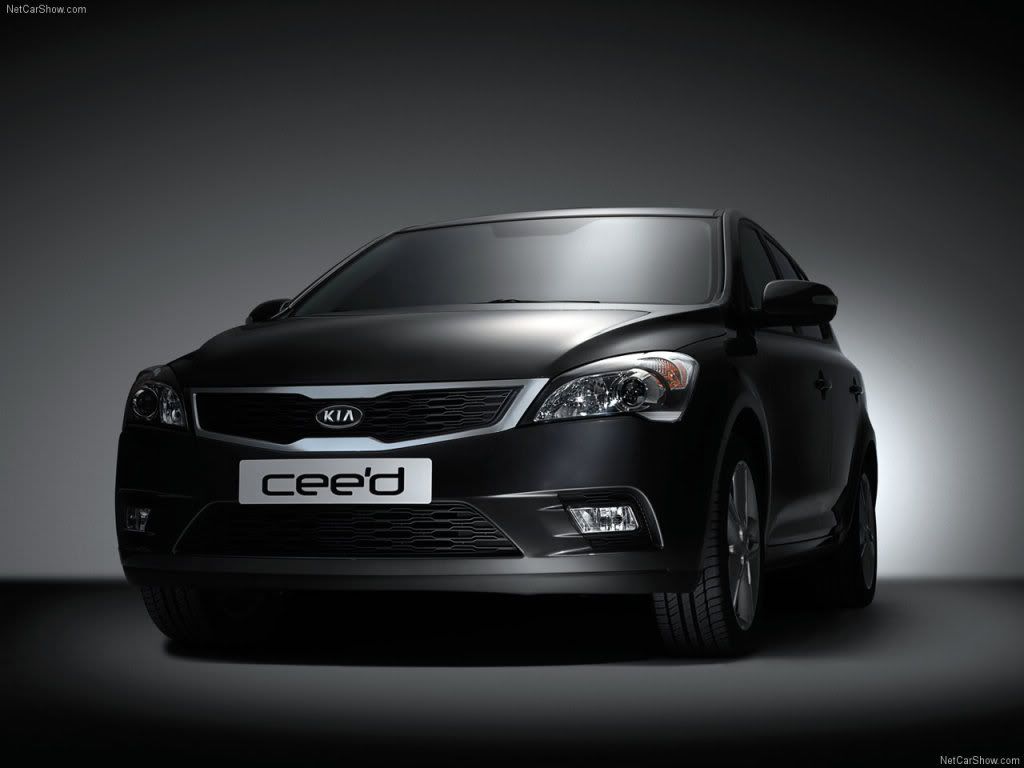
Frankfurt: Kia Shows Revised Cee'd Hybrid With New Face

KIA cee'd hybridKia Motors unveiled the revised hybrid-electric variant of the popular cee'd Hatchback in Frankfurt last week. Developed at Kia’s European R&D centre, the cee’d hybrid concept is a follow-up model of the initial cee’d hybrid model, which debuted at the Paris Auto Show last year. Since then, the new cee’d hybrid has adopted the new front fascia and received upgraded powertrain technology.

The Kia cee’d hybrid concept car shown in Frankfurt is powered by a 1.6L Gamma inline-4 engine that is paired with a 20 horsepower electric motor. The high-torque electric motor has a maximum torque of 105 Nm from just 1500 rpm. It is mated to a continuously variable transmission (CVT) developed by Kia. The hybrid-electric powertrain is similar in set up to the Forte LPI Hybrid's, but the cee'd hybrid propels on gasoline rather than liquified petroleum gas (LPG).

According to Kia, new cee’d hybrid reaches a top speed of 185 km/h and accelerates from 0-to-100 kmh in just 11.8 seconds. CO2 emissions of the hybrid model have been lowered by 25 percent from that of the standard cee'd to only 96 grams per kilometer.

[Source: KIA]

READ MORE for more images


REPORT: KIA Planning Diesel-Hybrids

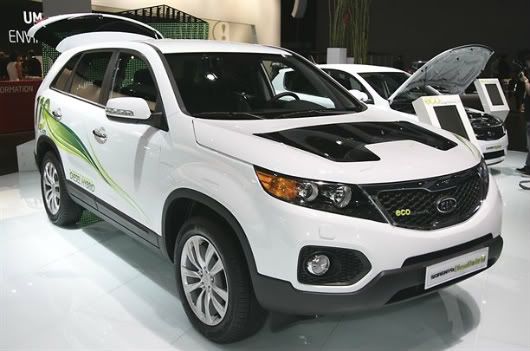
Kia SorentoKia has confirmed it will be pursuing diesel-hybrid technology in future production cars after showing a Sorento concept at the Frankfurt motor show. A Kia source told Autocar Magazine that a close variant of the Sorento hybrid’s powertrain is likely to make production by 2012 in the Kia range.

"Diesel hybrids are certainly the way we’d like to go with our alternatively powered vehicles in the future," said the source. "The powertrain seen in the Sorento has a strong chance of making production, be it in that model or others such as the Cee’d. All manufacturers have to work to get their emissions down and we think this is one our best chances of getting there."

The Sorento hybrid uses a new 1.6-litre diesel unit, which is fitted with twin turbochargers to help it produce 161bhp. The engine is mated to an electric motor and drives the front wheels via a new double-clutch transmission offering a choice of fully-automatic, or manual sequential gear changes. This helps the Sorento achieve CO2 emissions of 119g/km.

Kia is also looking at introducing electric vehicles within the next two years, according to another company source. The firm will launch a new version of the Picanto in 2011 and this is likely to be offered with an electric powertrain, too. Sister firm Hyundai showed off its all-electric version of the i10 city car at the Frankfurt motor show last week.

The source said Kia has also developed an all-electric version of its Sportage SUV in Korea.

"Company executives have all seen it,” said the source. “But it’s only ever been conceived as a prototype. It’s unlikely we’ll show something like that at a motor show be it as a concept or in production form."

[Source: Autocar]


Kia Releases More Venga Shots Ahead of Frankfurt Debut

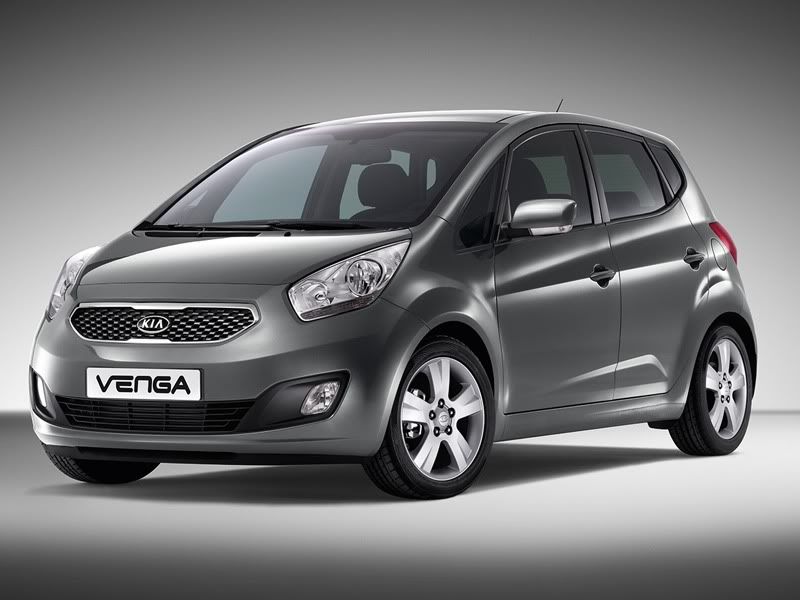
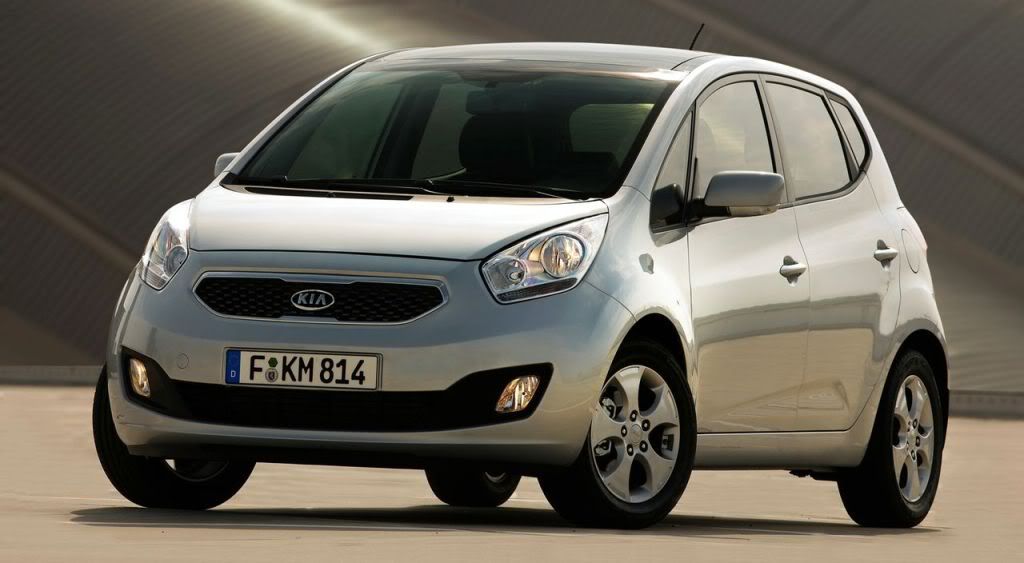
Kia VengaKia has released more official images of their upcoming Venga MPV. Based on the No 3 concept, the Venga measures 4,068mm in length, 1600mm in height, and 2,615mm in wheelbase. The car also boasts a sliding 60/40 split rear seat (which folds flat) and an available tilt-&-slide panoramic glass roof.

According to Kia's General Marketing Manager of Europe, Panu Vainamo, "The ‘Venga' name... has an attractive and lively sound that is ideally suited to our latest family car." He also stated that the Venga offers a "modern, polished feel that fits well with European consumers' active urban lifestyles."

Two 1.4-liter and 1.6-liter gasoline and diesel engines will be available. Their outputs range from 75 to 115 PS, and every engine is equipped with Kia's fuel saving stop/start system called Idle Stop & Go (ISG).

Set to be unveiled at the Frankfurt Motor Show, the new Venga will go on sale in Europe later this year.

[Source: Kia]

More new images after the jump


Frankfurt Preview: Hyundai ix-Metro Concept & i10 Electric

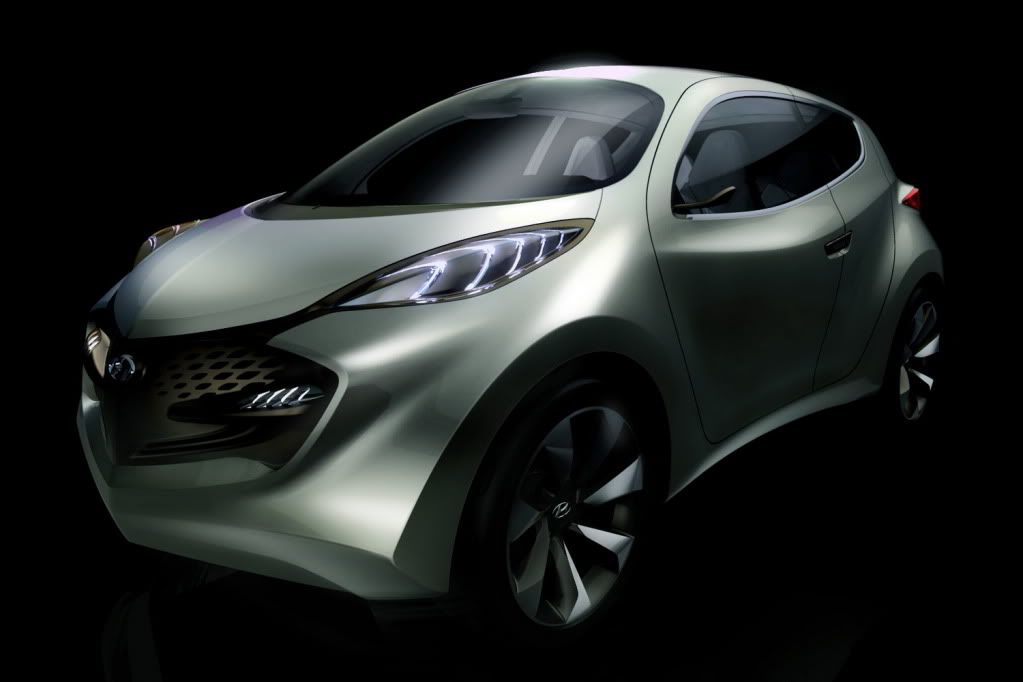
Hyundai ix-Metro ConceptHyundai is set to present the world debut of two green vehicles at the Frankfurt Motor Show. One, the ix-Metro will be present in concept form, the other the i10 Electric will be presented in production form.

The ix-Metro, a hybrid electric CUV concept, is aimed at the European sub-B segment and according to Hyundai will emit less than 80g/km of CO2. The vehicle is powered by an inline 1.3 liter, three cylinder engine featuring turbocharging and a six speed dual clutch transmission. The concept is designed by Global Design Team located in Korea.

The other vehicle, the i10 Electric will be displayed in production form with sales expected to beginning in early 2010 in the Korean market. Its powered by a 49 kW motor and a 16 kWh battery. It features a range of 99 miles and a freeway friendly top speed of 81 mph.


The i10 Electric will see limited series production in early 2010 with the first sales expected to go to government ministries, state corporations, and utility companies. Full retail sales are expected, but a date has yet to be announced.

Hyundai will also display several other advanced technology vehicles at the show including the Elantra LPI Hybrid, and the Blue Will Plug-In Hybrid previously displayed at the Seoul Motor Show.

Hyundai appears to show immediate concern with bringing several advanced technology vehicles to market as soon as possible and their unveiling at recent auto shows distinguishes them as a stand out in the advanced vehicle category.

[Source: Examiner.com]


Frankfurt Preview: 2010 Kia Venga

Kia VengaKia has released the first official images of their upcoming Venga MPV. Based on the No 3 concept, the Venga measures 4,068mm in length, 1600mm in height, and 2,615mm in wheelbase. The car also boasts a sliding 60/40 split rear seat (which folds flat) and an available tilt-&-slide panoramic glass roof.

According to Kia's General Marketing Manager of Europe, Panu Vainamo, "The ‘Venga' name... has an attractive and lively sound that is ideally suited to our latest family car." He also stated that the Venga offers a "modern, polished feel that fits well with European consumers' active urban lifestyles."

Two 1.4-liter and 1.6-liter gasoline and diesel engines will be available. Their outputs range from 75 to 115 PS, and every engine is equipped with Kia's fuel saving stop/start system called Idle Stop & Go (ISG).

Set to be unveiled at the Frankfurt Motor Show, the new Venga will go on sale in Europe later this year.

[Source: Kia]

Continue reading for more images


Frankfurt Preview: 2010 Kia cee'd (Facelift)

Kia Cee'dKia Motors has released the first pictures of new cee'd, revealing an updated look incorporating the new 'family face' of the brand. This mid-life revision unusually includes sheet metal changes to the bonnet plus alterations to the bumper, grille and light clusters. There have been some enhancements to the interior too in terms of specification and design. These include a more intuitive centre console and upgraded audio system including Bluetooth connectivity.

Paul Philpott, Managing Director Kia Motors (UK) Limited commented; "Since its launch just over a year and a half ago, cee'd has been instrumental in placing Kia firmly as one of the top five global automakers.

"(The) cee'd has been one of the first Kia models customers have bought for emotional rather than practical reasons. Now we have other aspirational cars in the range, such as the new Soul, we are establishing a clear image as a design led brand. With more new introductions due early next year, Kia offers one of the youngest product ranges available," he stated.

The revised cee'd will be unveiled at this year's Frankfurt Motor Show alongside two all-new Kia models.

[Source: Kia]


Frankfurt: Mercedes-Benz F700 Concept

Mercedes-Benz unveiled the F700 Concept at the Frankfurt Auto Show. While it packs the beautiful design, the real head-turner is the powertrain inside the car. The automaker's innovative DIESOTTO drive system packs a 1.8L 4-cylinder that achieves V6-horsepower levels at a staggering 44.3MPG and a CO2 level of only 127g/km.

"Our goal is to make the gasoline-powered car just as economical in consumption as the diesel," said Dr. Thomas Weber, head of the Group Research & Mercedes Car Group Development Department.

The F700 is also equipped with active PRE-SCAN suspension, a system that scans the roadway in front of the vehicle and automatically adjust the firmness to create a "flying carpet" sensation. Automotive News is reporting that the F700 might be the precursor to the next-generation S-Class, scheduled for debut in 2012. The rear could be toned down, but Mercedes-Benz is on the right track if the F700 is the way to go.

[Source: Mercedes-Benz]

Continue reading to view a hi-res image gallery and the official press release.


PRESS RELEASE: MERCEDES-BENZ F700 CONCEPT


With its Mercedes-Benz F700 research car, Mercedes-Benz redefines the idea of effortless, superior refinement: this concept for a future luxurious touring sedan shows how outstanding riding quality can be combined with high levels of environmental friendliness, and good performance with exceptionally low fuel consumption. Thus, the 5.17 meter long Mercedes-Benz F700 Concept with its innovative and very spacious interior design enables an entirely new and exceedingly comfortable mode of travel. The Mercedes-Benz F700 Concept is the world’s first car that can anticipatively recognize the condition of the road and level out the uneven spots with its active PRE-SCAN suspension, further improving suspension comfort substantially. The forward-pointing DIESOTTO drive system introduced in the Mercedes-Benz F700 Concept, a four-cylinder with a displacement of only 1.8 liters, combines the strong points of the low-emission gasoline engine with the consumption benefits of the diesel drive. Its CO2 emissions of a mere 127 grams per kilometer correspond to consumption of only 5.3 liters of gasoline per 100 kilometers (44.3 mpg), extremely low for a vehicle of this class.

This is made possible by a forward-looking drive concept, the heart of which is the “DIESOTTO” technology - an advancement of the internal combustion engine thought up by Mercedes-Benz. With its novel controlled auto ignition (CAI), direct fuel injection and turbocharging, it combines the high power of the spark-ignition engine with the exemplary torque and great fuel economy of a diesel. The drive system in the Mercedes-Benz F700 Concept, as four-cylinder featuring two-stage charging, attains the performance level of a current S-Class car with a 3.5-liter naturally aspirated V6 gasoline engine or the 3.0-liter V6 turbodiesel.

“Our goal is to make the gasoline-powered car just as economical in consumption as the diesel. The new DIESOTTO concept is a major step in that direction, combining the best properties of the spark-ignition engine and the diesel engine,” says Dr. Thomas Weber, Board member of DaimlerChrysler AG responsible for Group Research & Mercedes Car Group Development.

The Mercedes-Benz F700 Concept also sets standards in regard to road roar, tire vibration and suspension comfort. With two laser scanners the active PRE-SCAN suspension scans the roadway in front of the car. The hydraulically controlled active suspension proactively compensates for detected hindrances, enabling entirely new comfort characteristics -a “flying carpet” feeling.

Equally innovative is the operating concept “SERVO-HMI”. The display is not only particularly gentle on the eyes; the number of controls also has been appreciably reduced and the menu structure has been made strikingly simple and self-explanatory. The driver can “discuss” more complex inputs, such as a destination for navigation purposes, in dialogue with an avatar, a virtual operating assistant.

The exterior design of the Mercedes-Benz F700 Concept shows that with this concept an extraordinary amount of space has been created for the passengers. The very silhouette, characterized by the long wheelbase, is a clear indication of this. The design harmoniously joins together inspirations provided by nature with technical innovation. All the futuristic styling devices notwithstanding, the Mercedes-Benz F700 Concept is perfectly compliant with the brand identity of Mercedes-Benz.

The interior concept interprets comfortable travel and well-being in a completely new way. With its REVERSE seat the Mercedes-Benz F700 Concept breaks up the firmly established seat arrangement of conventional sedans and offers individual seating positions facing, or with one’s back to, the direction of travel, always affording maximum spaciousness and supreme comfort.

The Mercedes-Benz F700 Concept provides inspiring ideas for the technological future of Mercedes-Benz once again - like each of the research cars which preceded it.

Frankfurt: Kia KEE Concept

Kia unveiled the KEE Concept at the Frankfurt Auto Show. The design held some suspense before its reveal as the head designer responsible for the car was ex-Audi designer, Peter Schreyer. Schereyer was responsible for the designing of the first-generation Audi TT, which was a revolution in design at that time.

The KEE, a 2+2 coupe that has its chances of making it into production, is the precursor for future designs to come. Schreyer is also partly responsible for the design of the upcoming Kia full-size SUV (HM) and the next-generation Amanti. We're expecting some big things with the Korean automaker and Schreyer just might be one giant leap for the company.

[Source: Kia]


PRESS RELEASE: KIA KEE COUPE CONCEPT

KEE concept heralds “new look” for the future of KIA


More than any other car-buyer, the sports coupe enthusiast knows instinctively when a car is right, when it is suited to its purpose. Shape, proportion, stance and both tactile and emotional aspects all add up to a car that stirs the blood. At the 2007 IAA in Frankfurt, Kia has revealed just such a car.

The KEE is a combination of all of those elements. It is a harmonious blend of everything that sets the sports coupe apart from the more functional vehicle – the vehicle that has a range of activities to undertake and a palette of needs to take into account for its owner. The sports coupe is single minded. It is about driving, pure and simple. It is about appearance, performance, emotion.

Yet KEE is more than just a svelte, exciting sports coupe concept. It is also the dawn of a new design language for the Kia brand – a language that will speak to motorists across the world about the Korean company’s intention to become one of the major automotive names over the coming years.

Chief Design Officer, Peter Schreyer and his Frankfurt design team – headed by Gregory Guillaume – set out to make KEE a landmark car in Kia’s history. It is no coincidence that its name plays on the word ‘key’ because that is how essential KEE is to the future of Kia. KEE also acknowledges the Chinese and Korean word ´Ki`- the cultural concept for life-force or spiritual energy.

KEE embodies Kia’s desire to create a family of cars that will be instantly recognisable on the road and will have simple yet sophisticated appeal in the showrooms. Whether wide-eyed admirers of this new generation of vehicles are existing Kia customers – wise to the dramatically improved quality and traditional strong value of the current range – or entirely new audiences they will immediately recognise a range of cars aimed at those who enjoy driving and seek the perfect machinery to deliver that experience.

Schreyer commented:”KEE has to communicate a design language that will be seen on all future Kia products. That language has to be stated in certain elements of the visual representation – lines, shapes, details. But it has to be consistent and easy to understand. It must be visually strong and purposeful but it must be capable of being transferred from this sports coupe concept to a city runabout, a family saloon, a load-lugging MPV or a go-anywhere SUV.

“It was essential Kee should consist of a rhythm of lines – controlled, clean, pure. It had to have good, classic proportions and be well balanced,” he added. This is the future for Kia design – it must display the purpose, the function whilst still being capable of delivering an emotional aspiration.
With its broad stance and low profile KEE, a new interpretation of a 2+2 coupe, has a simple yet distinctive outline thanks to its long sweeping bonnet, slightly lengthened cabin with striking graphic treatment, sculpted flanks and strong, yet almost hidden, swage lines.

Beneath the powerful and unique appearance are a host of fine details all hinting at the car’s true purpose and harmonising to create a sophisticated design entirety. Whether it is the milled aluminium B-pillar visible through the panoramic grey-tinted glass, the distinctively individual 20 inch wheels and hand-cut Continental tyres or the small touches such as the electronic micro-switch door release set into the side-window glass, the clamshell rear hatch opening on electronic dampers or the unique front windscreen shape that mirror so many other details on the KEE, it is clear that this car has been lovingly created by people who care for design.

Inside – KEE looks and feels like a sports car that the keen driver will instantly feel comfortable and at ease in, with a cabin designed for maximum focus on driving. Clustered straight ahead, the main dials and controls are simple and straightforward utilising Kia’s new standard red-orange illumination.

Behind the square-bottomed steering wheel are paddles to shift the six-speed sequential gearbox. Instead of a standard gear stick an ergonomically designed lever sits atop the milled aluminium centre console and requires only a nudge forward or backward to select drive mode. And the top of the computer mouse-like lever flips up to reveal the electronic starter button.

Again, the design team have concentrated on producing a realistic sports coupe – not a flight of fancy. Every element of its design should be clear, easy to understand and to use. All the main controls are fly-by wire, but their feel in operation has been created to deliver a sense of traditional operation. For example, the toggle switches mounted on the dashboard – echoing the DNA of generations of sports cars – let you navigate intuitively through the interface menu of the info-media center.

After pressing the starter button the driver will immediately recognise the throaty roar of a V6. The next generation 2,7 litre MUE-II engine, producing 200 ps, delivers instant response, enormous flexibility and scintillating performance on any kind of road.

KEE uses light-weight aluminium or plastic panels and components wherever possible in order to allow the emphasis to remain on rapid and controlled progress that means simple fun and driving pleasure. This results in a low kerb weight with excellent balance biased towards the front to deliver neutrally safe handling. Yet KEE could be built with rear wheel drive or even all-wheel-drive allowing Kia to add to its growing range as its brand develops its reputation amongst a more exacting audience.
“All the main interior surfaces are covered in a semi-suede-like microfibre material and the body-hugging sports seats use a heard-wearing but distinctive metallic-finish cloth,” explained Salome Etienne – one of the KEE’s interior design team.

And continuing the real-life functionality of KEE, the rear of the passenger cabin is sufficiently spacious to allow four adults to travel in the vehicle when necessary. KEE is not intended to be a four-seat coupe but Kia knows that real people have real needs and the brand has no intention of moving into the exotic sports car territory that others so amply fill. And there is even space for a useful amount of luggage!

But echoing its concern for the comfort and convenience of its customers the designers have sought to ensure that when the need arises those rear passengers will not be confronted with a problem so common on most 2+2 coupes. “When the rear clamshell hatch is raised the roofliner stays fixed in place to ensure that passengers do not come into contact with the structure of the hatch when it is closed again,” said Raphael Le Masson – the other interior designer.

Exterior designer Fabien Coradin said: “This car is about passion and energy. It is not an act of reason. Buying a sports car is not a logical choice and that is what we wanted for this car. It may not have been the normal reason behind most Kia purchases in the past – but the brand is changing and this car shows what Kia can be in the future. But we do recognise that functionality has a part to play.”

Uncluttered, pure and timeless in execution yet modern, effective and usable in purpose, KEE represents a new ethos for the Korean firm. With KEE the entire design team is laying open its mind and its heart. This car stands as a clear indication of KIA’s design philosophy and how it sincerely wish Kia to be viewed – exciting, appealing, creative, aspirational, beautiful and yet functional, purposeful and realistic.

Gregory Guillaume, Chief Designer Europe, commented: “This is a starting point. It shows how we think and what we want to do – appeal to the emotional side of our audience and bring that balance of purpose and emotion into the Kia design language. With KEE we are irrevocably heading off on our chosen path…”

KEE is the first step towards a new family look for Kia vehicles underscored by a focus on design and although KEE is primarily a concept vehicle it is one that could easily go into production should public demand dictate. KEE lays down very clear indications of how Peter Schreyer and his team intend future Kia vehicles should look and displays elements that its creators will transfer to future products. Presented on the strong frontal design with its distinctive headlamps and eye-catching LED cluster, the new style grille will become the new face of KIA across the product range.

He commented: “Kia have given me – and our design teams – a fantastic opportunity. Seldom is a designer allowed to shape the entire personality of a brand, given a clean sheet of paper and told to create the future. KEE is the first step on the road and I am so excited about the potential this journey can create.”

“Although KEE is a sports coupe it could have been anything. We have already seen elements of our design development in Mesa and Kue shown at successive Detroit shows. Cee’d and its concept spin-offs including the ex_cee’d cabriolet have also started the process. But KEE is central to our future.

“It is our keystone to the future family we want to create. There is nothing in KEE’s design that cannot easily and readily be transferred to production vehicles. There is nothing in KEE that I would not be prepared to see in future production vehicles. This car stands as a clear indication of our philosophy for vehicle design and as a surest possible signpost to the type of vehicles we shall be bringing to showrooms in the very near future.

“I want motorists to be able to identify Kia cars almost unconsciously. It doesn’t matter what type of vehicle they see – right across the Kia range there should be a very obvious style and image that will encourage drivers to identify with the Kia brand and instantly understand the function of the vehicle at the same time as they admire its lines,” he added.

KEE ultimately serves the Kia brand on a number of fronts – a design exercise for a sports coupe that currently does not feature in the company’s line-up. No plans exist to put the car into immediate production but media and public reaction will be closely monitored.

It also allows Schreyer and the entire design team to present their thinking for a family appearance and design language to both internal and external audiences. In this respect KEE is the first stage in an on-going process that will be refined and re-examined but will stay true to the core elements of design contained in the car.

Perhaps most importantly KEE is a simple corporate statement to the motoring world that Kia is a brand underpinned with quality and reliability and now on top of that comes the emotional element of design. The future for Kia products lies in balance, clarity and purpose, and KEE, our latest show car embodies that philosophy.

Frankfurt: Toyota IQ Concept

Toyota has an answer to every vehicle in the market. Now, you can add the undoubtedly unique Smart to the list. Toyota unveiled the super-mini IQ Concept at the Frankfurt Auto Show. Unlike many concepts, the IQ Concept will see its daylight in parking garages and driveways rather than design centers and studios. Toyota has confirmed an ultra-compact car to be released in the next two years.

The IQ is short, VERY short. In fact, it is 425mm shorter than the already diminutive Toyota Aygo and 770mm shorter than the Yaris. Unlike the Smart which consists of a few unattractive quirks here and there, Toyota managed to do a stunning job in designing the IQ Concept. The IQ retains a roomy interior by utilizing a 3+1 seating arrangement albeit being a speck shorter of 3 meters.

[Source: Toyota]

Continue reading to view a hi-res image gallery and an official press release.


PRESS RELEASE: Toyota IQ Concept

Toyota’s revolutionary ultra-compact IQ concept

- The intelligent solution to urban transport
- Designed within the Vibrant Clarity philosophy
- Less than 3 metres in length
The IQ concept represents a paradigm shift in small car design, a concept car that challenges conventional thinking of automotive hierarchies: small yet spacious, premium yet small. Realized through the vision of an ultra compact, highly space efficient, environmentally friendly vehicle that maximizes the urban lifestyle of Europe’s fashionable metropolitan dwellers.

The IQ concept was created at ED2, Toyota’s advanced European design studio in the south of France, working under the Toyota design philosophy of Vibrant Clarity – design that is forward looking, intelligent and energetic while retaining a clarity of purpose and function.

Managing officer of Toyota Motor Corporation’s Design activities, Wahei Hirai, says:

“The IQ concept is designed to reflect and enhance the lifestyle of its owners. In an urban environment, people want to express themselves through dynamic and on-the-edge design, but at the same time rational factors such as size, functionality and CO_ emissions cannot be ignored. Bringing these contradictory aims together in synergy was critical to the IQ concept, and is a way of thinking we call the ‘J-factor’, a philosophy at the heart of all our activities.”

Just a palm shorter than three meters in length – at 2.98 meters precisely - the IQ concept is a radical new approach to vehicle packaging and design. It challenges the current limitations of ultra-compact urban transport by offering an interior capable of seating four or three adults and luggage space - a unique versatility within a minimal footprint.

The unveiling of the IQ concept also reinforces Toyota’s commitment to reducing vehicle emissions through vehicle concept innovation. With increasing traffic congestion in urban areas, and rising concerns about vehicle emissions, the IQ concept presents a step change in vehicle packaging and footprint, to ensure a sustainable future.

Designed for fashion and function

- Three elements of Vibrant Clarity
- Dynamic and daring exterior
- Functional and aesthetic interior
- Edgy urban colour contrast

All aspects of the IQ concept are designed to convey a confidence, and vibrance that belies its size. All are working to give the car energy and character that will stand out and enhance its premium fashion position in the urban environment.

Within Toyota’s Vibrant Design philosophy three core design values are utilized to guide the design process:

Perfect Imbalance in its proportion

The exterior is simple and daring with a stable and robust stance enhanced by the width of the vehicle contrasting with its short length. In side profile the ultra-short overhangs and cab-forward silhouette suggest a dynamic pose but at the same time interior space is kept to a maximum. The confident character of the front juxtapositions with the small, yet strong structure give the vehicle an iconic value.

Integrated Component Architecture

Expressing the structure and construction of the vehicle is vital to keeping the design simple yet at the same time energized, it also serves to clearly express the concept of the car. The structures around the 17 inch tyres form part of the minimal front and rear overhangs, a synergy that conveys both strength and agility.

In the interior the basic geometric structure of the instrument panel creates an open and wide environment. The manta-ray-styled centre console, a simple yet flowing structure that envelops the instruments to create a clear and vivid focal point. The air conditioning vents are constructed from a cylindrical form clearly relating to their function. The overall impression is of components in harmony, forming a new emotional expression.

Freeform Geometrics

The exterior surfaces of the IQ concept are almost mathematical in their cleanliness and precision, but at the same time have movement and emotion to keep the design fresh and unlikely to date. The character lines of the window opening flow smoothly and harmonize with the surfaces supporting them.

In the interior the freeform lines of the manta-ray-styled centre cluster are echoed in the door trim. Soft and inviting they encourage touch and contact, a combination of uncompromised aesthetics and functionality.

Overall, the IQ concept has a ‘on-the-edge’ style ready for the streets of tomorrow’s urban environment. This sense of vibrant, urban sub-culture is carried forward by the unique exterior colour; pearlescent white with flecks of purple shimmer hinting at the darker interior treatment. The senses are further stimulated by the touch of the mock snake-skin steering wheel trim, purple interior accents and purple styling themes carried over into the seats, door trims and dashboard.

Compact but not compromised

- Intelligent use of space
- Versatile 3+1 seating
- Fascinating blend of form and function
- Full safety features

The IQ concept sets out to be, and succeeds, as the world’s smallest four seat passenger concept car. At less than three metres in length (2980mm) it is 425mm shorter than the Toyota Aygo and more than 770mm shorter than the Toyota Yaris. Yet, in width and height (1680mm x 1480mm) it is comparable to Yaris – so the ultra compact exterior dimensions hide a big interior heart.

At the same time, the IQ concept is versatile and practical. It will seat four with space for three adults and a child – or the fourth seat can be utilised for luggage space. To achieve this, a radical and intelligent 3 + 1 seating concept has been applied. With a dashboard that swoops away from the front passenger, this seat has been given extra freedom of movement.

In regular use, driver and passenger sit side by side. But, to accommodate a third adult or adult and child, the front passenger seat can be moved in a more forward position allowing more room and easier access to the rear area.

In addition, extensive use of intelligent, space saving design themes and miniaturised technology helps maximise space within the passenger compartment. The ultra-compact heating and ventilation unit frees up space in the centre console and allows the dashboard to adopt its unique shape.

Atop the main dashboard sits the instrument pod, dark and mysterious with the swoops and curves of a manta-ray; its tail flashing in silver-chrome trim as it reaches down to form the cleanly-styled centre console. A single central dial provides control of interior environment with temperature and ventilation displayed on the central panel, clearly placed in the driver’s eye-line.

The three-dimensional, 3-in-1 display of speed, engine rpm and fuel status is mounted above the steering column while controls for audio and navigation functions are on the steering wheel itself. In an intelligent, hi-tech solution to urban navigation, a stand-alone, head-up display of the GPS route-finder is placed within the driver’s vision but is see-through when turned off.

A panoramic glass sun-roof ensures plenty of light and adds to the sense that passengers are not confined within a conventional compartment. At night, the darkened interior is mysterious – further emphasising the high fashion sense of the concept car.

Despite its ultra-compact design, it makes no compromises on safety in the urban environment. Indeed, safety is at the core of the concept strategy. A strong passenger compartment safety cell will ensure optimal impact energy absorption.

In presenting the IQ concept, Toyota reveals an intelligent new design and technology package - a radical solution to the challenge of personal urban transport. The IQ concept represents the ultimate refined urban mode of transport offering a revolutionary package, intelligent design, and environmental friendliness.

Frankfurt: 2008 Volkswagen Tiguan

Volkswagen unveiled the 2008 Tiguan at the Frankfurt Auto Show. Aimed at the Honda CR-V, Volkswagen is slowly approaching the would-be Toyota/Honda consumers rather than the higher German class. The Tiguan is slotted below the Touareg in the line-up.

The Tiguan was previewed by the Tiguan Concept shown last year at Los Angeles. Changes are subtle and the Tiguan expresses ruggedness and elegance, a perfect blend for the family man/adventurer. The Tiguan is available in three trim levels: Trend&Fun, Sport&Style and Track&Field. As the names suggest, the first two models are designed for on-road use while the last is designated for off-road as well.

The Tiguan is available in five power configurations, three gasolines and two diesels. The three gasoline models are all TSI direct-injection turbocharged engines. There are three horsepower flavours: 150PS, 170PS, and 200PS. The two diesel TDI engines produce an output of 140PS and 170PS and all pass the Euro-5 compliant standard. All variants are available via a 6-speed manual or a 6-speed automatic transmission. All models are standard with a full-time 4MOTION all-wheel drive. Sales are expected to commence early next year.

[Source: Volkswagen]

Continue reading for a hi-res image gallery and an official press release.


PRESS RELEASE: 2008 VOLKSWAGEN TIGUAN

Volkswagen is showing the new Tiguan in a world premiere at the International Motor Show (IAA) in Frankfurt. This “small brother” of the Touareg can be recommended to all those car drivers who enjoy the individual visual appearance and versatility of a SUV, but also expect a premium level of comfort, agility and variability. Its chassis sets new standards in the world of SUVs, because it is extremely driving-active and safe. All five engines - for the first time on the global SUV market all engines are charged without exception - already deliver, powerful propulsion just above the idling speed. Today, the completely new and very quiet common rail TDIs already satisfy the Euro-5 standard that does not go into effect until 2009. Upon request, the Tiguan can be parked nearly automatically in the urban jungle by the Park Assist feature. Off-road, on the other hand, the latest radio-navigation system (RNS 510) navigates its occupants back to civilization using its off-road function. Meanwhile, with up to 1,510 liters of cargo space, the Tiguan exhibits van qualities. 2,500 kilograms of trailer load also define the absolute best value in the Tiguan segment.

Trend&Fun and Sport&Style as clever and agile all-round talents

Very intentionally, Tiguan - offered in the equipment versions Trend&Fun, Sport&Style and Track&Field - is being offered in two body variants: The Trend&Fun and Sport&Style versions were specifically designed for primarily on-road use. Their agile, safe and highly comfortable driving behaviors are equal to those of a car. At the same time, these Tiguans do not shy away from either off-road drives or trailer loads. They leave the really rock-tough off-road routes to the Tiguan Track&Field.

Track&Field for more serious off-road duty

The Tiguan Track&Field was specially designed for life off of the asphalted trails. Different than the Trend&Fun and Sport&Style versions, this especially adventure-friendly Tiguan exhibits a more extreme entry angle (28 instead of 18 degrees; maximum angle without the vehicle impacting the trail in front). As standard equipment the Tiguan Track&Field also has a newly developed off-road mode that awakens an entire armada of assistance systems to make drives off-road especially safe.

First SUV in the world exclusively with charged engines

As already outlines, the Tiguan is the first SUV in the world to be offered exclusively with charged engines. The advantage of engine charging: More power, less fuel consumption and lower emissions. Take the example of the gasoline engines: There will be three new TSIs - direct injection engines with turbocharging or turbocharging plus supercharging. The four cylinders deliver 110 kW / 150 PS, 125 kW / 170 PS and 147 kW / 200 PS. Take the example of the diesel: A completely redeveloped generation of noticeably quieter common rail four cylinder engines is being employed here. The two TDIs output 103 kW / 140 PS and 125 kW / 170 PS and smash the Euro-5 emissions standard.

Full-time 4MOTION all-wheel drive and two six-speed gearboxes

Full-time all-wheel drive is absolutely essential off-road. On paved streets an intelligent all-wheel drive also improves active safety. In the Tiguan the latest generation of 4MOTION all-wheel drive is used. It is shifted by manual, or optionally automatic, six-speed transmissions. Both transmissions satisfy special off-road requirements. The manual transmission can be driven at an engine speed of 1,000 rpm or vehicle speed of just 6.69 km/h, for example; this practically equals the crawler gear of a reduction gearbox. The automatic transmission has gear level preselect; in off-road use it prevents shifting to the next higher gear.

A SUV interior with the variability of a van

The Tiguan is an all-round talent. This characterization not only describes its powertrain properties, but also the multivariable and very spacious interior. The rear bench seat is split with a 60:40 ratio, it can be adjusted 16 centimeters in the longitudinal direction, and the rear seatback has multiple tilt adjustment settings. This provides either more legroom in the rear or additional space in the cargo area. Available as an option is a double cargo f loor including cargo management system. Also standard on the Tiguan Track&Field and Sport&Style is a folding front passenger seat so that very long objects can be stowed. With regard to the seat position, the passengers travel exceptionally comfortably, not only in front but also in the rear. The reason: Similar to the case in a movie theater, rear passenger seating is a bit higher and therefore more relaxed.

The Tiguan parks independently and finds the way back from the desert all by itself

On board an SUV for the first time is the Park Assist feature, with which the Tiguan turns into a parking space nearly automatically and impressively. The off-road mode already mentioned is a technology show; no other SUV in the world can call upon such a network of safety systems off-road at the press of a button. The Tiguan also exhibits its mastery when it comes to trailer load: It may range up to 2,500 kilograms, which is handled by the new, swiveling trailer hitch. In a class by themselves are the touchscreen radio and navigation systems; the top model (RNS 510) offers a standard 30 gigabyte hard disk memory, an off-road navigation mode and rearview camera. Any of the passengers can also look through a panorama sunroof at the sky of the savannah or the city.

Frankfurt: BMW Concept X6 ActiveHybrid

We present you the first BMW ActiveHybrid Concept, the Concept X6 ActiveHybrid. The decals fooled us as a hydrogen model like the Hydrogen 7. The hybrid engine reduces fuel consumption up to 20%. The powertrain, co-developed with Daimler-Chrysler and GM, is composed of a combustion engine and two high-performance electric motors. It is mated to a two-mode active transmission that optimizes for low and high-speed usages.

The Concept X6 ActiveHybrid can be driven in electric power only, combustion only, or the hybrid of both motors. The ActiveHybrid system is the result of years worth of research that started out in the 1980's with an all-electric vehicle, the E1. Since that, a hybrid based on the BMW 518i in 1995, X5 EfficientDynamics in 2003, and the Concept X3 EfficientDynamics showcased BMW's evolution towards a production hybrid BMW. The Concept X6 ActiveHybrid is a good indication of the production hybrid BMW, to be released in the near future.

[Source: BMW]


PRESS RELEASE: BMW CONCEPT X6 ACTIVEHYBRID

The result is the first BMW in the hybrid world, BMW Concept X6 ActiveHybrid combining Sheer Driving Pleasure with significant enhancement of all-round efficiency. Through its drive concept alone, BMW Concept X6 ActiveHybrid allows far greater driving dynamics than a conventional hybrid car and at the same time reduces fuel consumption by up to 20 per cent versus a comparable car running on a combustion engine alone.

The innovative drivetrain and the unique concept of the Sports Activity Coupé unparalleled the world over form an ideal match. BMW ActiveHybrid technology has indeed been developed especially for a particularly dynamic car in this segment and for extensive use far beyond city traffic.

In terms of its size, character and driving dynamics, the BMW Sports Activity Coupé is simply ideal for bringing out the full potential of BMW ActiveHybrid technology, combining an elegant and dynamically flowing roofline with the features so typical of a BMW X car. In its design it clearly bears out the full DNA of BMW X, while interpreting the character of these cars in a uniquely sporting manner.

Combining the qualities of electric drive and BMW driving dynamics to provide an unprecedented driving experience.

BMW ActiveHybrid for the first time combines the combustion engine and two high-performance electric motors to allow use of the greater efficiency of hybrid technology over a much larger speed range than with a conventional hybrid vehicle. A further unique point is the driving experience provided by BMW ActiveHybrid reflecting the specific features and characteristics of electric drive together with the proven features of a combustion engine from BMW.

Responding directly and immediately to the driver’s commands when setting off, the electric drivetrain contributes its special qualities right from the start. Then, continuing the process of acceleration, BMW Concept X6 ActiveHybrid offers a perfect symbiosis of the drivetrain performance required and appropriate touch-based and acoustic feedback to the driver never seen before on a hybrid vehicle. The result is a driving experience at all speeds with that dynamic development of power and performance so typical of a BMW engine interacting with the particularly precise and fast-acting automatic transmission.

BMW ActiveHybrid: the next step in the BMW EfficientDynamics development strategy.

Offering enhancement of both all-round economy and driving dynamics, BMW Concept X6 ActiveHybrid fits perfectly into the BMW EfficientDynamics development strategy. Indeed, implementing this strategy with full consistency, BMW is able to offer cars in all segments through the current model range ranking right at the top against the competition in terms of both performance and efficiency.

BMW ActiveHybrid is a firm part of the BMW EfficientDynamics development strategy. Introducing this technology, BMW is taking the next step in consistently reducing both fuel consumption and emissions. BMW ActiveHybrid is based on a modular principle following the strategy of “Best of Hybrid” to integrate the optimum components in each case in various vehicle concepts. And pursuing this strategy, BMW, with its first full-hybrid car, is now taking the next step towards lasting and sustainable mobility based on Sheer Driving Pleasure.

BMW Concept X6 ActiveHybrid is the result of the consistent development of attractive vehicle concepts and drivetrain technologies. Inventing the Sports Activity Vehicle (SAV), BMW has already revolutionised the market by creating a complete, brand-new segment where previously there was only the sports utility vehicle (SUV). And given their supreme agility and driving dynamics, both the BMW X5 and the BMW X3 have now gained a dominating position in this segment.

Now the concept of a Sports Activity Coupé shows how the range of BMW X models so successful the world over might be enlarged by another exclusive variant, while at the same time presenting a further possibility of experiencing the sporting performance so typical of the brand in completely new style.

A further highlight is BMW’s outstanding competence in the area of drivetrain development, setting the basis for combining an innovative driving experience with outstanding efficiency. Once again, therefore, BMW is becoming the trendsetter in a market segment which shows particularly dynamic growth.

A hybrid car with that typical BMW character requires innovative technology.

The objective to combine that Sheer Driving Pleasure so typical of BMW with a significant reduction of fuel consumption and emissions in BMW’s first full hybrid, called for the development of innovative technology offering a synthesis of the combustion engine and the electric motor.

To make this process of development as efficient as possible, the BMW Group has joined forces with General Motors and DaimlerChrysler to form the Global Hybrid Cooperation serving to develop the next generation of hybrid drive systems. These three equal partners pool their know-how and resources in the GM, DaimlerChrysler and BMW Hybrid Development Center in Troy (Michigan, USA, concentrating in the process on a flexible system concept allowing each of the companies involved to integrate the particular concept, design and construction of their cars in the new technology, focusing on the specific features of each brand. Precisely this is why the technology of the two-mode active transmission created through this cooperation is part of the BMW ActiveHybrid modular development system.

Optimised use of energy and superior power in every situation.

The innovative power transmission featured by BMW Concept X6 ActiveHybrid combines two compact, high-performance electric motors with a transmission using fixed transmission ratios. These drive systems are connected to one another by three planetary gearsets allowing a power split covering the drive forces of the combustion engine and the electric motors in two transmission ranges and thus ensuring a level of variability quite impossible on a conventional hybrid drivetrain thanks to the combination of the two drive sources able to provide optimum power and maximum efficiency under all driving conditions and power requirements from the driver.

The system referred to on account of its two operating modes as the twomode active transmission also comprises a high-performance battery, power electronics with an integrated inverter module, and the cables required. The two-mode active transmission is based on an ECVT electrical continuously variable transmission. The two operating modes, one of which has been optimised for low, the other for high speeds, are supplemented by fixed transmission ratios.

The two power-split ECVT sections allow the drivetrain to run at continuously variable speeds and ensure full, highly efficient hybrid functions throughout the complete operating range of the car, the innovative system in BMW Concept X6 ActiveHybrid thus serving to reduce fuel consumption by up to 20 per cent compared with a comparable BMW running on a combustion engine alone.

Given the two-mode system, the electric motors are furthermore very compact in their dimensions, facilitating integration into the overall vehicle as well as a minimum increase in weight, which is lower in the case of BMW Concept X6 ActiveHybrid than with conventional hybrid cars offering comparable power.

BMW Concept X6 ActiveHybrid can be driven on electric power only, on the combustion engine alone, or with a combination of both power units. Depending on driving conditions, the electric motors may also be used for both accelerating and regenerative application of the brakes, in which case the brake forces generated when coasting and when applying the brakes flowi to the high-volt energy storage unit to provide an increase in electric power.

This energy subsequently available for further use need not be generated by the combustion engine and is therefore available virtually free of charge.

Already using this principle in a similar manner on production cars featuring Brake Energy Regeneration, BMW is able to ensure efficient energy management and maintain the battery at a high charge level. On the road, the support provided by the electric motors in this way referred to as “boosting” serves, first, to give the car incomparable spontaneity and a direct response and, second, to significantly reduce fuel consumption.

BMW ActiveHybrid comes in where conventional hybrid drive reaches its limit.

Conventional hybrid systems allow efficient motoring only in relatively small or medium-sized vehicles at relatively low speeds. This is because most of the power coming from the combustion engine has to be conveyed most of the time via the electrical path of the transmission and because of the use of a high level of electric power. A car with enhanced dynamics, performance and running speeds would therefore require a larger combustion engine calling for less efficient, larger and heavier electric motors.

In the power split drive mode, also referred to as the output branched concept, one of the two electric motors acts as a generator, converting some of the engine’s power into electrical current subsequently fed to the battery or the second electric motor. The second electric motor then converts such power coming from the first electric motor or from the battery back into mechanical power for the output drive shaft on the transmission.

Two-mode technology varies the balance of electrical and mechanical energy on the respective paths for optimum efficiency.

A further point is that a conventional hybrid drive system does not come with fixed mechanical transmission ratios, which would serve to optimise fuel consumption. Instead, conventional hybrid drivetrains use a continuously variable transmission, with the disadvantage that the actual requirement for performance and load feedback from the car are separated from one another, thus failing to provide a dynamic driving impression.

The two-mode active transmission, by contrast, overcomes and eliminates the disadvantages of a conventional hybrid drivetrain. It reduces the share of power flowing through the electrical branch of the transmission throughout a broad range of transmission ratios. Through its power split in two transmission ranges, the two-mode active transmission therefore provides the energy of both electric motors in an ideal form tailored to current driving conditions.

BMW ActiveHybrid: the result of years of research.

The principle of the two-mode active transmission in BMW Concept X6 ActiveHybrid forms a significant milestone in BMW’s ActiveHybrid strategy, fulfilling the demands made by a broad range of customers looking for a dynamic, economical and responsible form of motoring.

To reach this goal BMW pursues a clear-cut “Best of Hybrid” strategy enabling use of the optimum components under a modular principle within a wide range of different vehicle concepts planned for the future. Parallel to the Global Hybrid Cooperation, the BMW Group has therefore entered into yet another joint venture with DaimlerChrysler, developing components for hybrid drive in the luxury performance saloon.

BMW started to develop hybrid drive many years ago, long before the foundation of the Global Hybrid Cooperation. Indeed, BMW tested the electric drivetrain as early as in the late 1980s, for example in the BMW E1. And the BMW Group has been conducting research on hybrid technology and its various options for more than 15 years, making this technology and the results already obtained a firm part of the BMW X5 EfficientDynamics development strategy.

In the meantime the BMW Group has presented several hybrid vehicle concepts, starting with a hybrid car in 1995 based on the BMW 518i. In particular, the outstanding potential of this drive technology has been proven in the BMW X5 EfficientDynamics presented in 2003 and the BMW Concept X3 EfficientDynamics shown to the world in 2005.

Introducing BMW Concept X6 ActiveHybrid, BMW is proudly presenting the highest degree of maturity in hybrid technology seen so far. Indeed, this technology offers everything it takes to combine extremely efficient motoring with that Sheer Driving Pleasure so typical of BMW.

A clear sign of the special status of the BMW ActiveHybrid concept is the presentation of this technology in combination with a brand new type of vehicle: BMW Concept X6 ActiveHybrid is the unusually attractive vision of a truly innovative vehicle virtually predestined for such cutting-edge drivetrain technology.

A thrilling team: BMW ActiveHybrid and the world’s first Sports Activity Coupé.

BMW Concept X6 ActiveHybrid establishes a new benchmark right from the start through the innovative combination of design and concept features. Four doors and the smooth, dynamic coupé roofline interact with a high window line and extra-muscular wheel arches ensuring permanent presence and a perfect balance of the front and rear axle as a clear reference to all-wheel drive.

At the front BMW Concept X6 ActiveHybrid is dominated by design elements symbolising the vehicle’s dynamic orientation to the road, while from the side the vehicle’s proportions are particularly elegant and well-balanced. The short front body overhang emphasises the dynamic character of the car, the long overhang at the rear highlights the stretched and sleek appearance of the vehicle.

Moved far to the back and with the roofline dropping down visibly and continuously from the B-pillar, the greenhouse, together with the high window line, ensures flat and low-slung window graphics.

The roofline flows down gently to the contour lip at the rear, finally merging into a slight upward swing perfecting the coupé line and at the same time optimising the car’s streamlining.

The rear look of BMW Concept X6 ActiveHybrid is split by horizontal lines making the car look wider and emphasising its stable grip on the road.

A muscular bumper and the protective cover for the underfloor are further classic design elements characteristic of a BMW X Car. And last but not least, the proportions so typical of a coupé are borne out here in particular style typical of a BMW X Car, inter alia through the muscular and elegant shoulders.

A typical BMW also in design.

BMW Concept X6 ActiveHybrid is clearly recognisable as a BMW from every angle. All design features clearly bear out the language of BMW design, with the focus primarily on those sculptural lines so characteristic of all BMW X models.

The front, side and rear body sections flow smoothly and directly into one another, with additionally highlighting various design elements typical of the brand ranging from the BMW kidney grille through the dual round headlights with their cut contour and the powerful contour line at the side all the way to the horizontal lines at the rear.

Following the usual philosophy of a BMW X Car, the wheel arches show slightly square contours offering space for 21-inch light-alloy wheels in Y-spoke design created especially for BMW Concept X6 ActiveHybrid. This is indeed a brand-new rendition of such three-dimensional rims with the individual spokes showing recessed surfaces not only at the top, but also further down towards the inner sections of the wheel.

The exterior mirrors on BMW Concept X6 ActiveHybrid are likewise brandnew in their design, a white, shimmering row of lights standing out between the lower element finished in body colour and the upper section of the mirror cap made of aluminium. Supplementing the corona rings in the headlights so typical of BMW, these additional lights also provide a daytime light function.

The unique character of BMW Concept X6 ActiveHybrid is also borne out by the design of the rear lights where the L-shape so typical of a BMW X Car is re-interpreted in a particularly dynamic, sweeping motion. Extending far into the side panels, the rear lights also serve to emphasise the overall width of the car in its night design.

Front and rear: clear signals for efficient motoring.

BMW Concept X6 ActiveHybrid proudly presents its unmistakable design also through truly authentic, unique features clearly visible at very first sight. Hence, through its look alone this concept car arouses the greatest expectations of the driving experience in such a Sports Activity Coupé. It clearly underlines the robust character and superior traction of a BMW X Car in combination with dynamic driving qualities never seen before in this segment.

The unique character of this drivetrain concept is also expressed through the design of BMW Concept X6 ActiveHybrid: Not only the door cutout strips with their blue, illuminated “BMW ActiveHybrid” marking and the strongly contrasting colour scheme combining the paintwork with the dark window graphics confirm the special status of this vehicle, but also other, truly unique and innovative design features at the back of the car.

As soon as the electric motors take over in full and provide all the drive power required, a clear signal for optimised combustion and emission ratings is proudly displayed at the back, since the underfloor protection panel made of brushed aluminium both front and rear is a moving element on BMW Concept X6 ActiveHybrid: So as soon as the vehicle is running entirely on electric power, the rear protection panel may be moved up to cover the two tailpipes on the exhaust system as long as they are not required for their normal purpose.

The innovative philosophy of BMW Concept X6 ActiveHybrid clearly proves that large and dynamic vehicles may also be driven economically and with a clear focus on the environment, at the same time reaching new horizons in terms of driving pleasure and aesthetic design.

Frankfurt: BMW Concept X6

BMW unveiled its first iteration of a SUV/Coupe (call it SAV whatever) at the Frankfurt Auto Show yesterday. Dubbed the Concept X6, 90% of what we see will remain on the production model, due for release mid-2008. The X6 is the first of its kind and although being a love-it or hate-it design, we are stunned by what we can call Bangle's first truly gorgeous design. The front clip is nearly identical to the BMW X5. However, from the A-pillar back, the roof slopes down considerably to make a coupe impression. The rear visibility looks to be the worst of the worst and the rear occupants would look down to their pants for the whole journey. However, coming down to the result, they are traits worth sacrificing.

The engine options will be lifted from the X5 with a choice of a 3.0L petrol, diesel and the 4.8L V8. The X6 will be assembled at the Spartanburg, South Carolina plant in the US. The X6 is slated to go on sale in mid-2008. Continue reading to view a hi-res image gallery and the official press release.

[Source: BMW AG]


PRESS RELEASE: BMW CONCEPT X6

Inventing the Sports Activity Vehicle (SAV), BMW has established a highly innovative and, indeed, trendsetting segment in the automobile market.

And now the time is ripe for another brand-new concept: The Sports Activity Coupé combining an elegant, dynamically flowing roofline with the typical features of a BMW X model - a truly fascinating combination now borne out for the first time in the guise of BMW X6 Concept.

Presenting this concept car, BMW is proudly demonstrating the vision of a unique vehicle developing the striking design language of BMW X cars with a clear and consistent focus on sportiness and elegant presence.

BMW X6 Concept captures the eyes of the beholder through its highly innovative combination of design and concept features. The car combines four doors and a dynamically flowing coupé roofline with a high sill-line, muscular wheel arches, and a strong centre of gravity positioned right in the middle and making a clear reference to four-wheel-drive technology.

The result is a unique vehicle clearly presenting the DNA of a BMW X model but interpreting the character of such a vehicle in a unique and truly sporting manner. The design of BMW X6 Concept is the authentic visualisation of outstanding driving qualities borne out by the car mainly through BMW’s intelligent xDrive technology as well as Dynamic Performance Control.

Unique, aesthetic look: dynamic coupé line and the typical features of a BMW X model.

The front end of BMW X6 Concept is dominated by highlights in design clearly symbolising the car’s dynamic orientation to the road. From the side, in turn, the proportions are definitely elegant, the short front body overhang emphasising the dynamism of the car, the long overhang at the rear, its stretched and sleek look. The long line of the engine compartment lid merges smoothly and gently into the elegantly rising A-pillars, the greenhouse moved far to the back and the roofline tapering out clearly and consistently from the B-pillars interacting with the high window line to provide low and, indeed, almost flat window graphics.

The roofline, in turn, flows down gently to the rear spoiler, finally moving up again slightly in a small upward swing perfecting the overall line of a coupé and at the same time optimising the car’s aerodynamic qualities.

The dynamically stretched side lines highlight the aesthetic effect of this concept car, with BMW X6 Concept obtaining its impressive presence clearly through the unique combination of these lines and the design elements of a BMW X car.

Apart from the high window line, the large wheel arches and the centre of gravity visibly in the middle of the car, particularly this distinctive and powerful interaction of convex and concave surfaces, of the muscular side-sills with running boards made of drilled aluminium beneath the doors and the strong underfloor protection elements front and rear also made of aluminium express all the genuine DNA of BMW X.

Consistent focus on sporting performance.

BMW X6 Concept combines the design features so typical of a BMW X model with a truly individual, aesthetic look. In its character and design, this concept car stands out clearly from BMW’s highly successful SAV models, although the core features of those models provide a strong and sound foundation for the development of a unique personality in the guise of BMW X6 Concept as the Sports Activity Coupé.

With its impressively dynamic driving characteristics, the BMW X5 already excels as a true exception in its segment, and was indeed the forerunner creating the entire segment in the first place. Now BMW X6 Concept provides a clear impression of how an even more consistent focus on sporting performance in this class is able to set standards once again.

Through its design alone, this new concept car arouses the greatest expectations of the driving experience in a Sports Activity Coupé, bearing out the robustness and superior traction of a BMW X model in combination with dynamic driving qualities never seen before in this segment of the market.

World debut: Dynamic Performance Control in BMW X6 Concept.

Dynamic Performance Control making its world debut in BMW X6 Concept provides ideal qualities for experiencing new dimensions in driving dynamics. This drivetrain and chassis control system, combined with BMW’s intelligent xDrive all-wheel drive technology, offers a truly unique standard of driving stability in every situation, benefiting both driving dynamics and safety at the same time.

Dynamic Performance Control, a truly innovative system, spreads out drive forces as required in all situations, feeding a varying degree of power whenever required to the two wheels at the rear.

Dynamic Performance Control is the only system of its kind in the world able to provide its stabilising effect both under power and with the engine in overrun.

As soon as the system detects possible over- or understeer of the vehicle, for example in a bend, it will vary the distribution of drive forces between the wheels for perfect stability, dynamic traction, and forward motion. And in the process Dynamic Performance Control improves driving stability at all speeds, this unique chassis and suspension innovation ensuring not only safe traction when setting off and precise control when entering a bend, but also higher lateral acceleration and optimum directional stability when accelerating out of the bend.

BMW - setting the standard in a dynamically growing market segment.

Launching BMW X6 Concept, BMW is once again proving the company’s outstanding competence in the development of new car concepts. First, this fascinating study shows how the range of BMW X models highly successful the world over might be extended by yet another exclusive version; second, BMW X6 Concept presents the possibility to experience the sporting performance so typical of the brand in entirely new style and with brand-new features. The highly innovative Sports Activity Coupé created in this way is therefore once again paving the way into a dynamically growing market segment.

BMW X6 Concept is beyond comparison with any existing series production vehicle the world over. But at the same time it creates clear references and associations through its unique, sophisticated design, the world’s first Sports Activity Coupé guiding the fantasy of the particularly demanding motorist in a clearly defined direction: this car promises driving dynamics in a dimension never seen before.

Yet a further point is that BMW X6 Concept, through its extravagant look and appearance, opens up very tempting perspectives for the future, this Sports Activity Coupé boasting design ideally suited to prove individual style and character.

Unique, innovative - and BMW all the way.

BMW X6 Concept is unique and brand-new in the world of the automobile. But it nevertheless stands out as a genuine BMW at first sight, all design features of this concept study clearly reflecting the particular language of BMW design. Indeed, through its design language alone BMW X6 Concept makes a number of clear and highly recognisable statements simply because they are quite unique in this constellation: The car expresses sporting elegance, superior presence and stylish extravagance as well as the symbiosis of superior power and outstanding robustness so characteristic of a BMW X car and now enhanced to a significantly higher standard in BMW X6 Concept.

Clear orientation towards the product features characterising the concept of a Sports Activity Coupé gives BMW X6 Concept a fascinating look right from the start. Through its design alone, this car expresses the features essential to such an innovative vision of a completely new car. Conversely, this design principle now arouses the expectation that a BMW Sports Activity Coupé may well develop precisely the outstanding sportiness and superior power both on the road and offroad clearly borne out by this concept study.

So it is precisely the unique features of the vehicle that lead to its unmistakeable design. And it is this authentic design so typical of a BMW which gives the BMW X6 Concept its individual style and character and also reflects the image of the brand. In other words - only BMW is able to create a Sports Activity Coupé, and BMW X6 Concept shows what such a car must look like.


Frankfurt: Renault Kangoo Compact Concept

Alongside the new Laguna and Laguna Coupe Concept, Renault has unveiled the Kangoo Compact Concept at the Frankfurt Auto Show yesterday. According to Renault, the car targets "young, active town- and city-dwellers who are into sports and are looking for a compact car that matches their life-style." The Kangoo Compact Concept is coated with a two-tone paint of Fireball Orange and Brushed Aluminum. The car was built in partnership with Rollerblade. It consists of a roller-skate theme with 19-inch wheels and a rugged look throughout.

The Kangoo Compact Concept packs a 1.5L dCi 105 diesel that produces 105 horsepower. The tiny engine can propel the car from 0-62mph in 11.5 seconds. The Kangoo Compact is equipped with LED headlamps and a panoramic windscreen. It is also equipped with a 6-speed manual transmission and 4WD. Continue reading to view a hi-res image gallery and the official press release.

[Source: Renault]


PRESS RELEASE: KANGOO COMPACT CONCEPT: LIGHT, AIRY, AND IN PURSUIT OF LEISURE

Renault takes the wraps off Kangoo Compact Concept at the 2007 Frankfurt Motor Show. Kangoo Compact Concept sets the tone for the new, wider Kangoo line-up. It targets young, active town- and city-dwellers who are into sport and are looking for a compact car that matches their life-style. Its expressive, robust lines are emphasized by its special two-tone colour scheme that blends Fireball Orange and Brushed Aluminium. The cabin, which floods with light, is made to be shared with friends. Roomy and fun, Kangoo Compact Concept focuses firmly on the pursuit of leisure and this sporting life. Built around a roller-skating theme, the car was developed in partnership with Rollerblade, and inspired by the shared values of mobility, togetherness, and lust for life.

Kangoo Compact Concept, out in the open air


Kangoo Compact Concept is a compact, robust leisure utility vehicle that boasts an original design and unprecedented proportions. Its affable style is straight out of the fresh, modular world of Kangoo. What really sets it apart is its two-tone, three-door body, and extraordinary glazed surface area, while its unique Fireball Orange and Brushed Aluminium colour scheme highlight its generous curves.

Less than four metres long, Kangoo Compact Concept is in its element in towns and cities. Yet it is always ready to head for the open air and whisk its driver and three passengers away to the great outdoors. Its rugged all-terrain look is emphasised by a ride height that has been raised 200mm, and chunky 19-inch aluminium wheels with five blue-tinged translucent spokes. Its young, energetic personality asserts itself through its high-performance LED headlamp and indicator units, which hint at the world of roller-skating.

With its conveniently removable rear-section roof, the Kangoo Compact Concept can carry bulky equipment or simply give its occupants the chance to enjoy an open-air drive. Once the hinged roof-flap has been removed and the electrically-controlled rear screen has slid out of sight, the wide blue yonder beckons.

Because responsibility and respect for the environment matter to its users, Kangoo Compact Concept is powered by a 1.5 dCi 105 engine compliant with Euro IV standards and equipped with a particulate filter. With 240Nm of torque generated from 2,200rpm, the 105hp [78 kW] powertrain is an excellent solution for short urban trips and longer journeys on the open road.

A four-seater sitting-room on wheels

Kangoo Compact Concept’s cabin provides passengers with an astonishing living space, a legacy from its elder sister Kangoo. The playful, sporty, refined interior, with its astute blend of Skate Blue leather and techno-look Aluminium Grey 3D mesh fabric, topped off with a few splashes of Tonic Orange, really makes its occupants feel at home.

The dashboard combines softly rounded volumes and curved lines with transparent, slip-proof silicone material silicon, borrowed from the roller-skating world. The navigation screen, compass, and other controls that might be useful to people out for a drive are all located in the central console, very much in the Touch Design spirit that is so dear to Renault. Additional sporty touches include the steering wheel’s slip-proof cladding, blue and fluorescent orange liquid fuel and water gauges, and the speedometer, which incorporates a manual speed limiter as well as a blue zone representing the speed range of a person on roller skates, i.e. 0 to 80kph.

Kangoo Compact Concept boasts numerous functions for motorists who like family outings or getting together with friends. The tailgate has a lower panel that opens out to 45° and 90° - very convenient for putting on your roller skates (which the car is reequipped with) or for two people to sit down on. Seat positions are adjustable using an ergonomically designed electric finger-roll control shaped like a roller skate wheel. The seats slide forward so that the rear bench seat can swivel through 180°C to make full use of all the space in the car and – a very practical feature – so that passenger can get into the vehicle through the tailgate.

Spare roller skate wheels and other accessories can be stowed in the purpose-built bins in the side panels, which frees up space in the cabin. In keeping with the skating spirit, Kangoo Compact Concept exudes youth and dynamism, emphasised by two translucent blue side waves made from plexiglass and a stylish, metal mesh floor shaped like a half pipe.

A new approach to light

Kangoo Compact Concept’s generous interior space is highlighted by the brightly lit ambience in which it bathes. Its panoramic windscreen is supplemented by a glass roof and a retractable rear roof flap and rear screen. The wide sweep of its windows lets the light shine in, creating a bright, warm feel, while also affording occupants a panoramic view of the road.

The rear roof flap and rear screen can be folded away in just a few seconds to make room for bulky objects or simply to enjoy a ride in the open air. The removable roof feature is unique. It is ideal for people with fast lifestyles who like having fun with friends and are always keen to try out new experiences.

Dimensions

* Overall length: 3,896 mm
* Width, excl. external mirrors: 1,856 mm
* Height: 1,717 mm
* Weight: 1,225 kg

Powertrain

* 1.5 dCi diesel engine equipped with particulate filter
* Power: 78 kW / 105 hp. Max. torque: 240 Nm at 2,200 rpm
* Acceleration from 0 to 100kph in 11.5 seconds
* 139 g/km CO2 emissions, standard fuel consumption of 5.3 l/100km
* 6-speed manual gearbox
* 4WD

Frankfurt: 2008 Lamborghini Reventon

How good can a million-dollar Lamborghini be? We've all imagined it and at Frankfurt, the raging bull unveiled its $1 million+ Reventon. Only 20 units are being built and they were all sold out before the automaker even unveiled them. The Reventon is based on the Lamborghini LP640, but adds a little more than minor touches. The exterior is composed of CFC, a composite carbon fiber. The exterior adds more sharp and angular lines than its base model.

The interior adds a fighter-jet cockpit inspired dashboard. The electronic gauges bring a sense of KITT. The F22 Raptor fighter jet-inspiration continues with the same 640 horsepower 6.5L V12 as its base model. The Reventon can propel from 0-62mph in a mere 3.4 seconds. Its top-speed is limited to 211mph. Continue reading to view a hi-res image gallery and the official press release.

[Source: Lamborghini]


PRESS RELEASE: The essence of the marque: just 20 examples of a design masterpiece

Clearly a Lamborghini, but nothing quite like it. A super car without equals: The Lamborghini Reventon is a road vehicle with an extreme specification and, at the same time, a limited edition masterpiece - a coherent style, angular with sharp lines, inspired by the very latest aeronautics.

With just 20 produced, each Lamborghini Reventon is a symbol of extreme exclusivity, yet still offering the extraordinary performance that makes the Murcielago LP640 so unrivaled: under the completely autonomous design, the Reventon possesses the entire technical and dynamic competence of the twelve cylinder Lamborghini.

Lamborghini prides itself on being the extraordinary manufacturer of extreme super cars without compromise. Sensuality and provocation characterizes every Lamborghini, with an aggressively innovative style. “However, the Reventon is the most extreme of them all, a true automotive superlative. Our designers at the Lamborghini Style Center took the technical base of the Murcielago LP640 and compressed and intensified its DNA, its genetic code,” affirms Stephan Winkelmann, chairman and CEO of Automobili Lamborghini, S.p.A.

Born in Sant’Agata Bolognese

The Lamborghini Reventon has been entirely designed in Sant’Agata Bolognese, the original birthplace of the Lamborghini and the native home of every super car born under the sign of the bull. Every detail of the projects drawn up in Lamborghini’s Centro Stile (Style Center) is fine-tuned in close collaboration with the Lamborghini Technical Department and Development Division. Thus, the Reventon is not only “haute couture” but it also stands out for its elevated dynamism whilst entirely suitable for every day use.

The Lamborghini Reventon is not destined to remain a one-off. A total of 20 Lamborghini friends and collectors will be able to own this extraordinary car and, naturally, enjoy the incomparable pleasure of driving it.

Inspired by the fastest airplanes

The present-day Lamborghini models are distinguished by the clear language of their shape. The coherent proportions of the Murcielago and Gallardo highlight their power and dynamism. Sharp edges, precise lines and clean surfaces: these are ingredients of a style reduced to the essential. Each element is created exactly according to its function; ornaments and decorations are totally foreign to a Lamborghini.

With the Reventon the Centro Stile designers have coherently developed this philosophy, inspired by another sphere where speed and dynamism reign absolute: modern aeronautics, responsible for the fastest and most agile airplanes in the world. This has created a new extremely precise, technically striking style with a new vitality: interrupted lines and contorted surfaces create a fascinating play of light, giving the car incredible movement.

Made of Carbon Fiber and precision

Although it is based on the extraordinarily successful Murcielago LP640, the exterior design of the Reventon is completely new. Just like the base model, the exterior of the second edition is made of CFC, a composite carbon fiber material, which is as stabile as it is light. The exterior components are glued and riveted to the body comprised of CFC and steel, resulting in the dimensions and proportions of the Reventon being very similar to the Murcielago.

The front is characterized by the acute angle of the central ‘arrow’ and by the powerful forward-facing air intakes. Although they do not supply air directly to a turbine like an airplane, bearing in mind the 640 hp, an abundant volume of air is necessary to cool the carbon brake discs and the six-cylinder calipers.

Characterized by coherent fuctions

Naturually, both doors on the Reventon open upwards - since the legendary Countach this has also been a symbol of the V12 Lamborghini production line. With their asymmetric configuration, the large spoilers below the doors provide an example of extreme coherence with which a Lamborghini fulfils its function: the spoiler on the driver’s side is large to increase the flow of oil to the radiator. On the right side of the vehicle, the spoiler is flat because in this case, it only has to ensure the flow below the floor. The aerodynamically optimized flag below-floor structure terminates at the rear with a diffuser featuring an accentuated shape. This guarantees excellent road grip and stability even at 340 km per hour.

In spite of the extreme and innovative language of its shape, the Reventon not only maintains all the strong features of the Murcielago LP640, but also offers further amelioration in terms of aerodynamics, the important engine cooling system, the air intake system, and brakes. The airflow and the section of the variable geometry air intakes of the engine and rear spoiler (also adjustable) have been modified. Ultimately, owners of the 20 examples will be able to test the performance of his or her Lamborghini in person!

Perfected to the ultimate detail


The engine hood made of glass laminate with open ventilation slits offers a glimpse of the beating heart of the twelve 6.5 liter cylinders of the super car. The glass also features the marked arrow angle that characterizes the design of the second edition from the front to the rear spoiler. The Lamborghini designers’ love for detail is beautifully illustrated by the fuel tanklid: a small mechanical work of art, achieved by milling a solid aluminum block.

The combination of lights transform the incisiveness of the design into light: the front features the most modern light-emitting diodes alongside Bi-Xenon headlights. Seven LEDs ensure continuous daylight while there are a further nine diodes for the indicator and hazard lights. Another technical innovation is found in the rear LEDs. Located near a fire-spluttering volcano (the exhaust system) and above the cooling air outlet, where in spite of the excellent insulation the temperature can reach up to 120 degrees (just too much for common diodes) the rear LEDs have to be especially resistant. Therefore, special heatproof LEDs were developed for the indicator and hazard lights, stoplights, and rear lights with a triple arrow optical effect.

Wheels with surgical precision

Naturally, such a refined language of chape also demands an extraordinary color. For the 20 examples of the Reventon, the designers from Sant’Agata Bolognese - which includes one trained as an aeronautics engineer - have created a totally new hue: Grey Barra due, a mid opaque grey without the usual shine. However, thanks to the metallic particles, in the sun this color tone features surprising depth. The opaqueness of the carbon exterior creates a complementary contrast compared to the individual body elements, in the same color but with a higher degree of shine.

This play of opaque and luster is also featured on the wheel rims, especially created for the Reventon. Brilliant carbon fins are screwed onto the opaque black aluminum spokes, not only creating a visual effect but a turbine effect also ensures optimum cooling for the powerful ceramic brake discs.

TFT display similar to an airplane

The same innovative force applied to the exterior design characterizes the cockpit of the Reventon. Designed and created using Alcantara, carbon, aluminum, and leather that comply with the top quality standards, the interior is inspired by the next generation cockpits: just like in modern airplanes, the instruments comprise three TFT liquid crystal displays with innovative display modes. At the touch of a button, the driver can choose from three vehicle information display modes. The instruments are housed in a structure milled from a solid aluminum block, protected by a carbon fiber casting.

The G-Force-Meter is also completely new: this display shows the dynamic drive forces, longitudinal acceleration during acceleration and braking, as well as transversal acceleration around bends. These forces are represented by the movement of a sphere within a circuit depending on the direction and intensity of the acceleration. A similar instrument can be found in high performance airplanes. Formula One teams also use a similar device to analyze dynamic forces.

Customizable Instruments

The speedometer on the Reventon resembles a road in which the current speed is represented in a digital fade mode. The instrument on the left associates the number of revolutions in the form of a luminous column with the display of the selected gear. Finally, every Reventon is equipped with a robotized e-gear controlled by two small levers under the steering wheel.

By simply pressing a button, the driver can switch to the second, quasi-analogical display, where the classic circular instruments, speedometer and tachometer are configured in the equally innovative way and transformed into luminous pilot lamps with varying colors. The G-Force-Meter naturally remains at the center of in this display mode.

Electronic system developed entirely by Lamborghini

All this is possible thanks to the fact that the entire electronic platform of the Murcielago, together with all the control devices, has been autonomously developed by the Lamborghini experts.

The same process for integrating the electronic displays in the car was applied to the Lamborghini Engineering Department.

From the conception of the very first radical ideas, the entire Reventon has been developed in Sant’Agata Bolognese thanks to tight teams of remarkably creative experts. An extremely refined and efficient process was employed: CAD video design and development, creation of the prototype in Centro Style workshop, all carried out under the constant supervision of the Development Division technicians and testers.

Atelier of creativity and high efficiency


Inaugurated in 2004, the Centro Stile is dedicated to design and characterized by a high degree of efficiency: an “atalier” of creators, designers, and prototype constructors, who encapsulate the Lamborghini culture and the spirit by using their remarkable skills to create aesthetic innovation. Under the direction of Manfred Fitzgerald and his team grouped around the design manager, the Lamborghini Centro Stile incarnates the best Italian tradition and takes it into the future via advanced production processes.

The Centro Stile is located in a 2900 square meter building made of aluminum and glass featuring two interconnecting floors. The large pavilion houses two test floors and related production and analysis equipment, while other rooms are set aside for the most advanced computerized workstations for designers and a prototype construction workshop. The Centro Stile is also closely linked to the nearby engineering department: the direct line between the Lamborghini development departments guarantees that ideas rapidly become reality.

Creativity and production under the same roof

The Lamborghini Reventon is a practical illustration of the streamlined functionality and efficiency characterizing the Centro Stile: it took less than a year to progress from the first ideas to the finished car. The complete design process from the first sketches on paper, to three dimensional computer models, with 1:10 or 1:4 scale, right up to the real size prototype is organized around streamlined, fast, efficient work groups. Thanks to the Centro Stile, for the first time in history, Lamborghini is now able to create its own style philosophy in-house without having to rely on any external collaboration.

The Reventon prototype was created using the same quality standards as for customer cars. Moreover, the next 20 examples will be manufactured in Sant’Agata, using a production process characterized by artisan perfection and rigorous quality standards.

A design masterpiece with tested technology

The technology found in the Murcielago LP640 has not been modified. The engine in the LP640 forwards is the classic twelve-cylinder engine with 6.5 liter displacement. At 8000 revolutions per minute, the power reaches an astounding 640 hp (471 kW). The huge torque, equal to maximum 660 Nm, ensures a powerful switch from any number of revolutions: even the slightest pressure on the accelerator is spontaneously transformed into thrust. The robotized e-gear changes gear faster than even the most expert driver. In addition, the permanent Viscous Traction four-wheel drive system ensures that every force is constantly translated into movement.

As in the original Murcielago LP640, the Reventon accelerates from 0 to 100 km/h in just 3.4 seconds, with a maximum speed of over 340 km/h.
Related Posts Plugin for WordPress, Blogger...